Sanction Exemptions and the New Relativity of Power
A few days ago, U.S. Treasury Secretary Scott Bessent was unequivocal: exemptions for Russian oil were ending. No more waivers.
Then came the reversal. After interventions associated with Steve Witkoff and Jared Kushner—and ahead of his regular weekend call with Vladimir Putin – Donald Trump extended them.
On paper, this was a familiar show of authority: the White House signaling that it still “holds the cards” in global energy politics. In reality, it exposed something else entirely—the widening gap between administrative power and physical control.
Reality Check: Supply Beats Paper
Sanctions only matter if they are backed by control over the supply chain—from wellhead to end user. Without that, they are theory at best.
Here lies the paradox. While Trump once dismissed Kyiv as a player “without cards,” Vladimir Zelensky has done precisely what sanctions alone could not: reshape the physical conditions of the market.
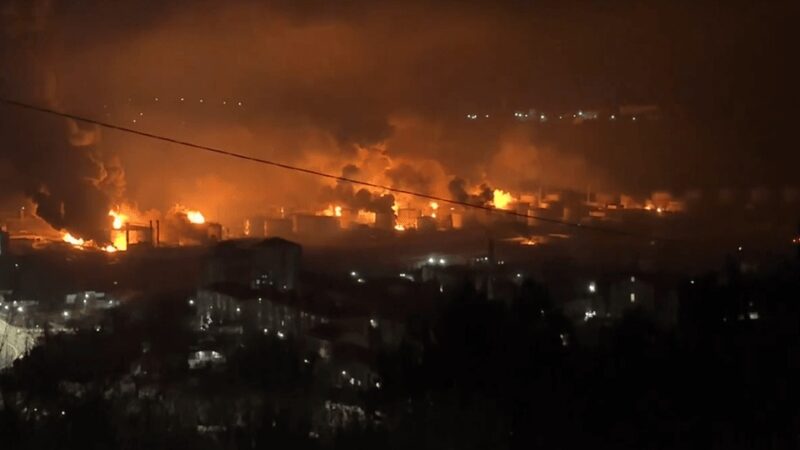
Through sustained pressure on Russian energy infrastructure—refineries, logistics hubs, and export routes—Ukraine has reduced Moscow’s ability to move oil. Not rhetorically. Physically. Despite calls from Washington to avoid targeting Russian energy assets, Kyiv has continued to constrain export capacity.
Support Independent Analysis
Help us keep delivering free, unbiased, and in-depth insights by supporting our work. Your donation ensures we stay independent, transparent, and accessible to all. Join us in preserving thoughtful analysis—donate today!
The implication is straightforward: exemptions have limited impact if the oil cannot physically reach export terminals.
The surge in Russia’s March oil export revenues (crude and refined products), totaling approximately $19 billion, was driven primarily not by sanctions relief but by market shocks linked to tensions involving Iran. This represents nearly a twofold increase compared to February (around $9.7 billion).
At the same time, Volodymyr Zelenskyy has claimed that Ukrainian strikes on Russian energy infrastructure reduced Kremlin revenues by approximately $2.3 billion.
The tally is likely to rise in April, following recent strikes on several key refineries and terminals – including the ‘heart’ of Transneft’s crude oil transport system in Samara and the refinery in Tuapse.
The Illusion of Control
For months, Washington’s unofficial envoys – Witkoff and Kushner – operated under a simple assumption: the real negotiations happen in Moscow. Kyiv was secondary.
That logic has aged poorly. While diplomacy circled the Kremlin, Ukraine focused on operations.
The result is a quiet but decisive shift: the actor that can influence physical flows now shapes outcomes.
Licenses and waivers issued in Washington increasingly resemble promissory notes drawn on a shrinking asset base. Crucially, Kyiv is no longer compelled to align with Washington’s tactical preferences—hence the renewed efforts by Trump’s emissaries to engage directly with Zelensky, including meetings at his office.
Europe’s Quiet Repositioning
Moscow expected Washington to eventually bend Europe on sanctions. That has not happened—and is unlikely to happen soon.
Instead, Europe has adapted. Fatigued by uncertainty in Washington, EU capitals are recalibrating: diversifying energy supply, strengthening regulatory defenses, and reducing exposure to both Russian energy and American unpredictability.
Even close U.S. allies like Canada, the UK, and Nordic states are reassessing long-standing dependencies.
In this context, impromptu visits by Secretary of State Marco Rubio increasingly resemble damage control—efforts to translate volatile signals from Washington into something allies can still operationalize, while shielding his boss from open criticism by the U.S. defense industry over lost European contracts.
Domestic Politics, Strategic Costs
Trump’s logic is clear. Lower energy prices reduce inflation; lower inflation helps at the ballot box.
But this is a short-term fix with long-term costs. Administrative flexibility cannot compensate for structural erosion. When infrastructure is degraded and logistics disrupted, policy tools lose traction.
In energy markets, power ultimately belongs to whoever controls the flow—not the paperwork.
The Cards Have Moved
The old metaphor of geopolitical poker no longer fits.
- The United States still wields powerful financial instruments, but their effectiveness is increasingly constrained by physical realities. In periods of volatility, futures markets tend to yield to the pressures of spot trade.
- Europe has rediscovered the leverage of regulation and market size – and is using both more assertively. Yet it remains exposed, constrained by Green Deal–driven aversion to fossil fuels and persistent import dependencies.
- Russia retains vast resources but is steadily losing the capacity to deploy them at scale, compounded by uncertainty over sanctions regimes and exemptions for its seaborne crude.
- Ukraine, once dismissed, is now shaping the operational environment that defines everyone else’s options.
The Irony of 2026
The irony is difficult to miss.
The leader once told he had no cards has altered the game – not through declarations, but through disruption. In today’s energy geopolitics, a drone strike on a refinery can carry more weight than a signed exemption.
The cards were never just in Washington. They were always in pipelines, ports, and supply chains.
And those are now contested terrain.
Ilian Vassilev