Turkey’s New Defence Pact: A Challenge for NATO?
The Strategic Implications of the Pakistan-Turkey-Saudi Arabia Alliance
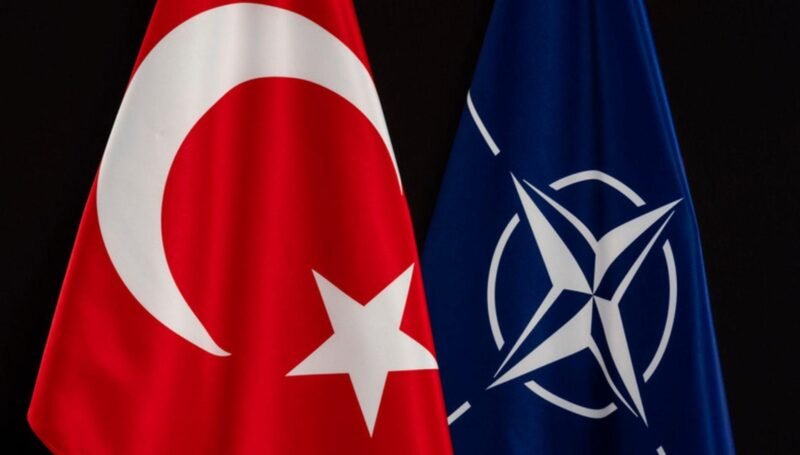
The new defence agreement between Turkey, Pakistan and Saudi Arabia marks an important development in the security architecture of the Middle East and South Asia. The three countries have established a mutual-defence commitment under which an attack on one is to be treated as an attack on all. Turkish Foreign Minister Hakan Fidan has compared the mechanism to NATO’s Article 5, while stressing that the pact is defensive and not directed against Iran or any other country.
For NATO, however, the key question is not whether Turkey can belong to another defence alliance. It can. The North Atlantic Treaty does not prohibit its members from entering additional security arrangements, provided those commitments do not conflict with their NATO obligations. The new pact therefore does not, by itself, create a legal conflict with Turkey’s membership in NATO.
The real issue is what happens when the two systems of collective defence intersect.
Article 5 is not an automatic war mechanism
An attack on a NATO member does not automatically trigger a predetermined military response from every Ally.
Article 5 establishes a collective-defence obligation, but each member determines what action it considers necessary. That may include military force, but can also involve intelligence, logistics, air defence, cyber capabilities or other forms of assistance. The North Atlantic Council must assess the circumstances and coordinate the response.
This distinction is particularly important in Turkey’s case because Article 5 has geographical limits. Article 6 defines the territories and forces covered by the collective-defence commitment. An attack on Saudi Arabia would therefore not become a NATO matter simply because Turkey intervened in its defence. Nor would an attack on Turkish forces deployed in Saudi Arabia or Pakistan automatically trigger Article 5.
Where the problem begins
Consider a different scenario: Saudi Arabia is attacked, Turkey intervenes under the new pact, and the conflict subsequently leads to an attack on Turkish territory.
That would be a fundamentally different situation. Turkish territory falls within the geographical scope of NATO’s collective-defence provisions. The fact that Ankara had entered the conflict under a separate treaty would not automatically exclude Article 5. At the same time, NATO would still have to assess the circumstances and determine the appropriate response.
This is where law meets politics.
The central question would be whether Turkey had become the victim of an armed attack within the meaning of the NATO Treaty, or whether the circumstances were part of a conflict that Ankara had itself initiated or escalated through its separate commitments.
Support Independent Analysis
Help us keep delivering free, unbiased, and in-depth insights by supporting our work. Your donation ensures we stay independent, transparent, and accessible to all. Join us in preserving thoughtful analysis—donate today!
The distinction would not necessarily settle the Article 5 question, but it could make the political decision considerably more difficult.
The risk of entrapment
This creates a classic alliance dilemma: entrapment – the possibility that one ally’s regional commitments draw other allies into a conflict they did not choose. Trump’s decision to attack Iran, followed by the expectation that European allies should support or facilitate the US campaign, is a case in point.
Turkey is simultaneously a NATO member, a major military power and an increasingly autonomous regional security actor. Its new partnership with Pakistan and Saudi Arabia adds another layer of security commitments. These arrangements do not automatically contradict NATO, but they create overlapping strategic obligations.
The danger is therefore not that Turkey can simply “drag NATO into war” by invoking its new pact.
The more realistic danger is escalation across alliance boundaries:
Regional conflict → Turkey intervenes → attack on Turkey → NATO crisis.
This becomes particularly sensitive in any future confrontation involving Iran or Israel, even though the three governments currently insist that their agreement is defensive and not directed against either country.
Turkey’s strategic hedging
From Ankara’s perspective, the agreement is consistent with a broader strategy of strategic hedging.
Turkey is not abandoning NATO. It continues to regard the Alliance as a central pillar of its security. At the same time, it is building parallel regional security relationships that increase its freedom of action and reduce its dependence on any single security provider.
This is not necessarily a contradiction.
It is an attempt to combine the protection and strategic weight of NATO with greater regional autonomy.
The real issue for NATO
The Pakistan-Turkey-Saudi Arabia pact should therefore not primarily be seen as a legal challenge to NATO.
The legal principle is relatively clear:
Turkey can belong to more than one defence arrangement, provided its other commitments do not conflict with its obligations under the North Atlantic Treaty.
The strategic consequences are much less clear.
NATO operates within a defined geographical and political framework, while Turkey is increasingly building security relationships beyond that framework. The result is a new potential pathway for escalation:
A conflict that begins outside NATO may nevertheless acquire consequences inside NATO.
That is the real significance of the new pact.
The challenge for NATO will be to ensure that overlapping security commitments do not become competing pathways into escalation. For Turkey, the objective appears to be different: remain firmly anchored in NATO while developing enough strategic autonomy to avoid depending on NATO alone.
That balancing act may become one of the defining features of the emerging security order between Europe, the Middle East and South Asia.
Ilian Vassilev