Oil and Oligarchy: The Sanctions That Risk Cracking Putin’s Elite Foundation
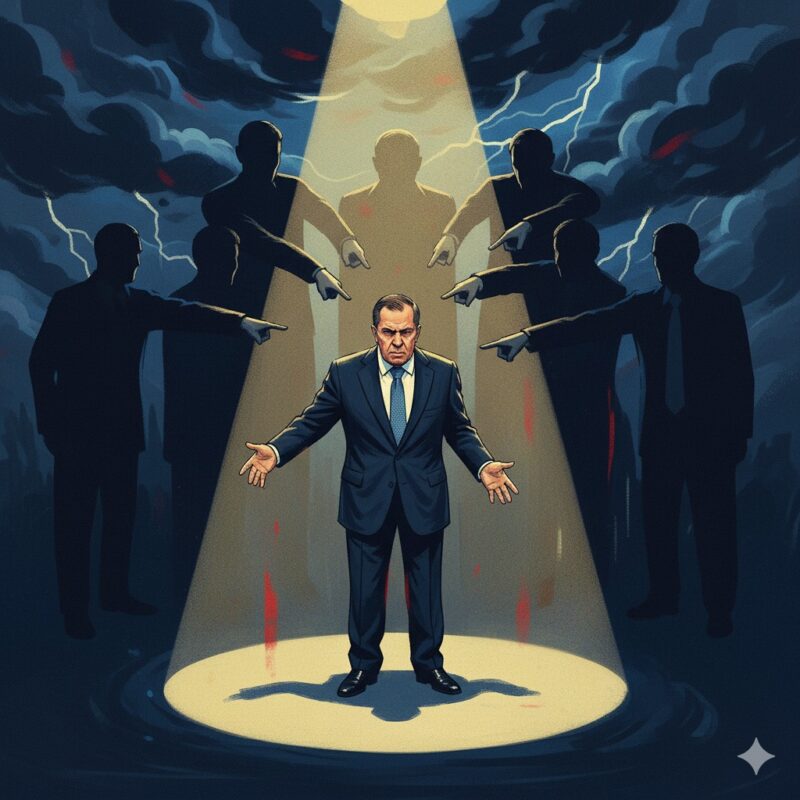
The recent US sanctions targeting Lukoil and the broader Russian energy sector were hardly a surprise. They represent a direct escalation following similar British measures and, crucially, a reported response to Donald Trump’s disappointment after meeting Vladimir Putin in Alaska. Today, the Kremlin is in a state of agitation, frantically seeking accountability for this diplomatic and economic failure, with Foreign Minister Sergey Lavrov squarely in the crosshairs.
Diplomacy as a Corporate Cover
For decades, the true mission of the Russian Foreign Ministry transcended mere diplomacy. It operated as a vast, covert economic apparatus dedicated to ensuring the seamless global operations of major Russian corporations, particularly the oil giant, Lukoil.
This was based on a long-standing, direct agreement between Putin, Lavrov and Lukoil’s majority owner, Vagit Alekperov. Under this understanding, the diplomatic service provided intervention and protection wherever Lukoil faced obstacles. In return, the company offered essential cover and robust financial channels crucial for the operations of Russian diplomats and special services abroad.
The symbiosis became even more critical following 2022, when the movement of Russian diplomats in Europe was severely curtailed. To maintain intelligence and logistical activities into Western Europe, these services were forced to pivot, relying heavily on corporate structures and local citizens—including those in the Balkans.
This is the source of Moscow’s current political and literal heat. The US sanctions have struck at the heart of Russia’s most valuable resource for foreign influence: the extensive, integrated networks of its state-aligned energy companies.
Lavrov: The Elite’s Convenient Culprit
Sources, that claim access to Kremlin’s inner turf wars, indicate that Putin had a tough talk with Lavrov, laying primary blame on the Foreign Minister for the failure of a highly anticipated Trump-Putin meeting, reportedly planned for Budapest. The accusation leveled against Lavrov is that he took an “overly maximalist” position in preliminary contacts with US Secretary of State Marco Rubio, which allegedly led to the Budapest meeting’s postponement and the subsequent imposition of sanctions.
The notion that Lavrov could make such politically explosive decisions without Putin’s explicit instruction is, of course, absurd. The Minister has long functioned as a loyal operative, carrying out orders without any significant independent political weight. While he does find himself in open conflict with the Dmitriev-Ushakov line—a “private diplomacy” that often bypasses the Foreign Ministry—everything Lavrov executes is ultimately commanded by the Kremlin.
A Blow to the Regime’s Financial Foundations
This time, however, the fear gripping Putin is palpable and real. The sanctions against Rosneft, Lukoil, Surgutneftegaz, and Gazprom Neft target over 75% of Russian fuel exports. This massive cut threatens the main source of the state budget and the primary means of funding for Russia’s security forces and the war in Ukraine.
The impact is not merely economic; it is fundamentally political. The financial stability of the entire Russian oligarchy, the very foundation of Putin’s power structure, is under threat. On one side, state revenues are shrinking, making salaries for the army, police, and special services uncertain. On the other, the loss of Lukoil’s overseas assets and networks strips Russian intelligence of a key mechanism for financing and legitimization.
Support Independent Analysis
Help us keep delivering free, unbiased, and in-depth insights by supporting our work. Your donation ensures we stay independent, transparent, and accessible to all. Join us in preserving thoughtful analysis—donate today!
The desperate measure of issuing government debt in yuan is an expression of extreme desperation, not a significant solution.
This is not a temporary crisis. It is a profound shock capable of destabilizing the regime’s foundations. Having tracked the Kremlin’s Byzantine world over the years, I believe the danger for Putin’s reign is real this time. His downfall is unlikely to come from street protests, but rather from rifts along lines of personal interest among the ruling elite.
Russian Diplomacy in Disgrace
Putin instinctively senses this threat and reacts by seeking a scapegoat rather than contemplating reform or, critically, ending the war. Lavrov is a convenient choice. He has long been the international symbol of diplomatic hypocrisy, burdened since the first day of the war with an impossible task: to sell blatant aggression as a “just cause.”
Today, as the Kremlin loses access to the core resources that sustain it, Russian diplomacy has finally fallen out of favor. This is no longer a game of image; it is a struggle for survival in what appears to be the final, panicked phase of Putin’s rule. While he and his inner circle scramble to salvage remnants of their foreign networks through last-ditch schemes, like those allegedly involving Gunvor-Lukoil, internal panic is brewing in Moscow.
The regime knows the balance of interests that held it together is beginning to crumble. It is just a matter of time.
Ilian Vassilev