Trump’s Ultimatum and the Rise of “Special Operations”
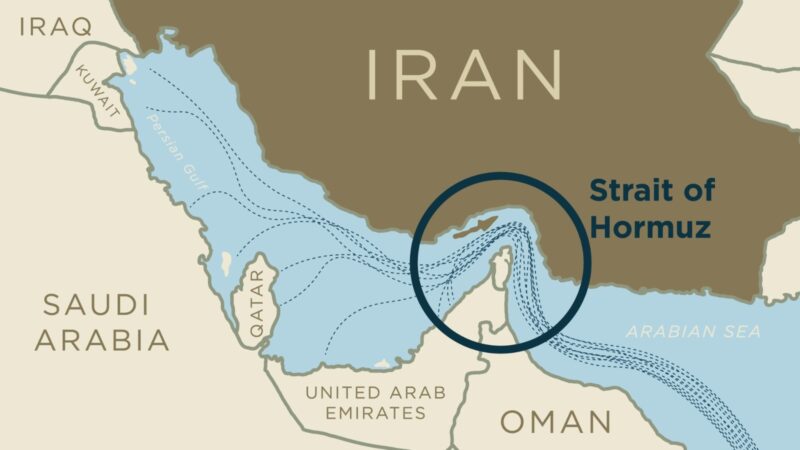
The 48-hour ultimatum issued by Donald Trump to Iran-demanding the reopening of the Strait of Hormuz under threat of destroying the country’s energy infrastructure-expires on Monday night.
Yet the most consequential aspect is not the threat itself, but the way it was delivered: a post on Truth Social. Not an address to the nation, not a National Security Council meeting, not a coordinated institutional communication. This trivialization of decisions about war and peace-about life and death-has become a defining feature of Trump’s political style.
What we are witnessing is the normalization of warfare conducted through social media, while the president remains at Mar-a-Lago.
This is not merely a change in tone. It reflects a deeper transformation in how military force is legitimized, justified, and executed.
From War to “Special Ops”
Formally, Trump lacks congressional authorization to wage war against Iran. Instead, his administration relies on an expansive interpretation of the War Powers Resolution of 1973, which allows the use of force for up to 60 days, plus an additional 30 days for withdrawal.
But the real shift lies elsewhere.
The administration avoids the term “war” altogether. It speaks instead of limited, defensive operations-responses to attacks on U.S. assets, protection of allies, and preemptive strikes. The logic is familiar, echoing Russia’s framing of its invasion of Ukraine as a “special military operation.”
This linguistic substitution is not cosmetic-it is functional.
By avoiding the term “war,” the administration creates a legal gray zone in which escalation can proceed without triggering constitutional constraints.
War Without Decision
The escalation pathway is not difficult to anticipate.
The United States and Israel strike Iranian infrastructure, including desalination facilities, power plants, and other elements of critical civilian systems. Iran retaliates, likely targeting Gulf states. The United States and Israel respond by raising the stakes further.
At no point is war formally declared. Yet the situation increasingly resembles one.
This is a new type of conflict-a “war in fragments”: no clear beginning, no decisive political authorization, but a continuous cycle of strikes and counterstrikes.
In the Iranian case, the risks are particularly acute. The geography of the conflict-from the Persian Gulf to the Levant-and the networked nature of Iranian influence mean that any local escalation can rapidly evolve into a regional crisis.
The Strategic Paradox
The U.S. constitutional system was designed to prevent unilateral decisions to go to war.
Paradoxically, in its current form, it enables something else: prolonged armed conflict without a decision for war at all.
A president may struggle to initiate a large-scale war without congressional approval-and may not obtain it, as evidenced by recent efforts within the Republican Party to block resolutions restricting the use of force abroad without authorization.
Yet nothing effectively prevents a president from launching a limited operation that gradually expands into a larger war.
This is not a breakdown of the system. It is its evolution.
Energy Shocks as Strategy
The consequences of escalation extend far beyond the battlefield.
If oil prices surpass $140 per barrel, strategic planning will give way to crisis management. Governments will reorder priorities, placing energy security at the forefront. The global energy system will experience a severe shock with uneven but far-reaching consequences.
Europe, having significantly reduced its dependence on Russian energy, remains particularly vulnerable. Japan and South Korea face similar exposure due to their reliance on maritime routes through the Strait of Hormuz. China, by contrast, possesses buffers-strategic reserves and overland supply routes from Russia and Central Asia.
In this context, markets are unlikely to assign primary responsibility to Tehran or Tel Aviv. Instead, Washington will be seen as the central actor in both managing and escalating systemic risk. Trump, however, shows no repentance and appears willing to leverage this dependence to impose his strategic will.
Iran’s Logic: Globalizing the Crisis
Iran’s response is equally predictable.
If pushed to the brink, Tehran is unlikely to seek de-escalation. Instead, it will attempt to globalize the crisis-raising the cost not only for the United States, but also for its allies.
Strikes affecting Qatar and the global LNG market already demonstrate this logic. Unlike oil, gas markets are less flexible and more regionally constrained, making disruptions sharper and harder to absorb. Moreover, the stakes extend beyond gas: petrochemicals, helium, and fertilizers-critical to global supply chains, particularly ahead of the agricultural season-are also at risk.
This is not classical deterrence. It is escalation as leverage.
Chaos or Strategy?
At first glance, Trump’s actions appear erratic-a failure to fully account for risks and second-order effects.
Yet an alternative interpretation is plausible.
The apparent chaos may conceal a deeper strategic design, potentially aligned in part with Israel and, paradoxically, intersecting with Russian interests-not merely to constrain Iran’s nuclear ambitions, but to degrade its broader strategic capacity.
At a systemic level, this could also reflect an effort to pressure China and the European Union through energy disruption-deepening their dependence on alternative supplies, including U.S. LNG, while undermining their industrial competitiveness.
If so, the conflict is no longer regional. It is systemic.
The Kremlin’s Double Game
Reports from Iranian sources suggest that Russian officials and military “advisers” have encouraged Tehran to expand its retaliation-specifically targeting energy infrastructure in Gulf states-while providing intelligence and targeting data.
At the same time, through informal channels involving figures such as Kirill Dmitriev and intermediaries linked to Jared Kushner and Steve Witkoff, Moscow has signaled to Washington a degree of understanding-even tacit support-for potential U.S. and Israeli actions, including the possible seizure of Kharg Island.
This may appear contradictory. It is not.
For the Kremlin, a prolonged crisis serves a clear purpose: higher energy prices replenish state revenues and sustain its war economy. Instability, in this sense, is not a risk-but an asset.
The Next Phase-and the Point of No Return
The next phase is likely to involve attempts at internal destabilization within Iran through protests and political pressure. Yet there is no guarantee that domestic opposition will align with external strategic objectives.
If this approach fails, escalation on the ground becomes the remaining option-including potential operations targeting critical nodes such as Kharg Island.
At that stage, risks become nonlinear: a sharp surge in energy prices, widening regional conflict, and the loss of control over escalation dynamics.
Managed Crisis or Loss of Control?
The central question is no longer whether the United States can formally initiate war without Congress.
The question is whether it can find itself in a war without ever making the decision to begin one.
Increasingly, the answer appears to be yes.
And herein lies the greatest danger for the US and its EU allies – not in sudden conflict, but in slow, almost imperceptible escalation driven not by clear decisions, but by interpretation.
What appears as chaos may in fact be a managed process.
But even managed crises can spiral beyond control.
Ilian Vassilev