Are there changes in store for the leadership in Zhongnanhai*?
Galena Slavova, business professor at Changzhou University
Following an intense diplomatic schedule in Beijing during April and May, there has been a noticeable “lull” after President Xi Jinping’s first visit this year to the DPRK—North Korea. Given the lack of any agreement resulting from that visit and the unclear message regarding exactly what the leaders of China and North Korea had achieved, one thing became clear – Beijing is consistently distancing itself from the Kremlin, but this does not bring it closer to Pyongyang; on the contrary, it isolates it from this former partner. For its part, Pyongyang will pragmatically exploit the situation surrounding the Kremlin by obtaining technology in exchange for providing assistance in the war against Ukraine. The horizon for this cooperation, however, is the end of the war against Ukraine; with it will come the end of Pyongyang’s support for Moscow. And then we will once again see a shift in the partnership toward Beijing.
Support Independent Analysis
Help us keep delivering free, unbiased, and in-depth insights by supporting our work. Your donation ensures we stay independent, transparent, and accessible to all. Join us in preserving thoughtful analysis—donate today!
The situation in Beijing, however, bears the hallmarks of a creeping coup. Signs of internal tensions can be gleaned only from the latest arrests of individuals suspected of corruption (as usual), trials, or simply the disappearance from the public eye of leaders at various levels of the party leadership. President Xi Jinping has again been absent from the public eye for quite long periods, but this has been offset by a flurry of laudatory articles and speeches on various peripheral social issues. It is interesting, however, that the date for this year’s Fifth Plenum of the CPC was, in an unprecedented move, changed from October/November to July. We can only speculate for now about what prompted this change, but it will become clear next month. Let me remind you that it is very important for this type of plenum to be held a year before the party congress; in fact, it is at this plenum that discussions about the party leadership take place and plans for the next five years are drawn up, which party congress will then simply formalize. Let’s not forget that next year also marks the end of the current president’s third extraordinary term, which was secured through a constitutional amendment. It is expected that next July will bring clarity on how the tensions at the highest levels of power—which have persisted for more than two years—will be resolved, as well as whether there will be a reshuffling of the leadership. And from there, what China’s new foreign policy line will be.
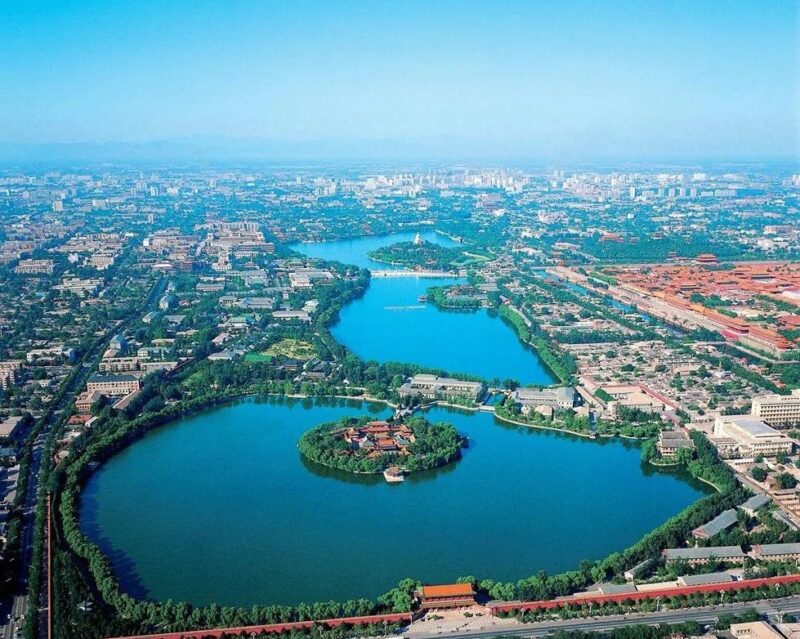
** Zhongnanhai (中南海) is the complex in Beijing that houses the offices and residences of the top leadership of the Chinese Communist Party and the Chinese government. In effect, it is the Chinese equivalent of the Kremlin in Russia or the White House in Washington. The name itself means “Central and South Sea,” after the two lakes within the complex. It is located immediately west of the Forbidden City in central Beijing. Originally an imperial garden, it became the political center of communist China after 1949.