Macedonia in NATO: A Formal Ally, a Questionable Partner
Ahead of the NATO Summit in Ankara
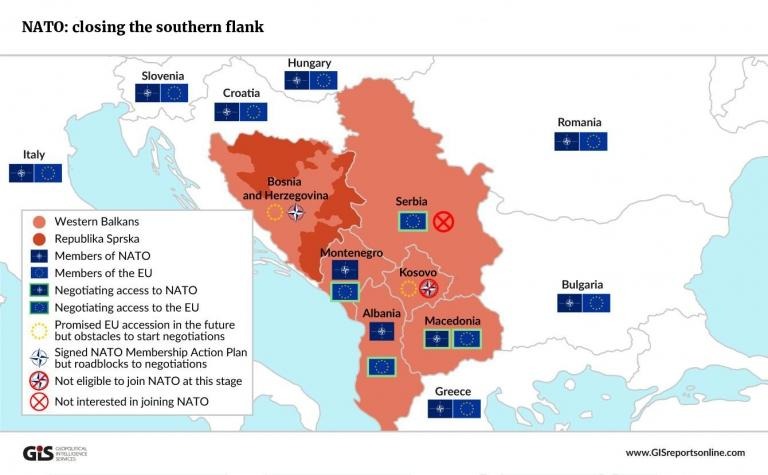
Ahead of the NATO Summit in Ankara, it is worthwhile to examine Macedonia’s participation in NATO, particularly through the lens of its implementation of policies aligned with NATO’s defense concept, as well as its conduct and reliability in the context of emerging geopolitical developments. There are several perspectives that should be considered in a comprehensive manner rather than separately, as they are interconnected and provide a complete picture of Macedonia within NATO. This is particularly important for creating a realistic assessment of its behavior within the Alliance, the level of trust it enjoys among its partners, cooperation with allies, the actual readiness of the country’s capabilities, the development of defense capacities, the strengthening of societal resilience, defense spending, regional influences, adherence to common defense policies—especially regarding third countries—and participation in various arms and military equipment transportation deals involving questionable states.
Why do we emphasize these criteria when assessing Macedonia’s behavior within NATO? Because, through its actions, Macedonia often appears to be in complete contradiction to the formally declared, and above all desirable and appropriate, conduct and policies accepted within NATO.
This contradiction is not exclusively related to relations with Bulgaria and the efforts of Macedonia’s day-to-day politics to create persistent and intensified tensions with Bulgaria, while simultaneously presenting these relations in a completely distorted manner to the Macedonian public. Here lies the problem that Macedonia creates not only in terms of its own relationship with NATO, but even more so in the relations between NATO allies. This “problem” in the Macedonia–Bulgaria relationship is used almost daily to portray the bilateral relations as irresolvable, shifting the focus beyond political disagreements toward an increasingly societal and interpersonal conflict between the two communities. Such a development is particularly dangerous for the region and, consequently, for NATO’s Southern Flank.
Is Macedonia a Reliable NATO Partner?
No, it is not. Simply put, Macedonia is a conflict-prone society in which existing and latent internal security risks make it vulnerable and an exporter of instability to the region, and consequently to NATO itself.
Russian influence maintains strong positions in Macedonia and manifests itself through various social groups and religious communities, but most notably through direct influence within the Macedonian government. Macedonia has a Deputy Prime Minister (Ivan Stoiljković) who maintains direct and close ties with Putin, while at the same time the authorities in Macedonia expect their declarative statements that the country is a reliable NATO member to be accepted at face value.
Of course, Russian influence through Stoiljković is not exclusively Russian in nature; there is also direct involvement from Belgrade. However, relations with Serbia and its influence on Macedonia will be addressed in a separate analysis.
What is important to note here is that the creation of tensions in relations with Bulgaria and Greece, as well as Macedonia’s failure to join the European Union, can also be viewed as consequences of Russian influence. This represents a prolonged conflict characterized by the cultivation of distrust toward allies and among allies within NATO, and in the long term, within the European Union as well.
This deliberately cultivated conflict with Greece and Bulgaria in particular, together with the latent tensions with Albania—especially when viewed through the prism of both future and past relations with Macedonian Albanians—provides a comprehensive picture of Macedonia as an (un)reliable NATO member.
It should be emphasized that this assessment concerns exclusively political relations and political tensions. The idea of meaningful military or military-technical cooperation within NATO, or any other form of regional alignment with NATO partners through sub-alliances, defense-industrial cooperation, or technological development, remains largely imaginary rather than a reflection of reality. Macedonia is excluded from such sub-alliances and has effectively isolated itself, as there is no serious cooperation with NATO allies, even on a bilateral basis. Formal relations with Turkey—such as the purchase of artillery systems and the receipt of equipment and vehicles as assistance—do not constitute a level of serious strategic cooperation. Likewise, annual visits to Turkey by the Prime Minister or attendance at defense technology exhibitions by the Minister of Defense do not represent meaningful efforts to establish effective military-technological cooperation with Turkey. Quite simply, there appears to be no genuine interest on the part of Macedonia, while annual communication with Turkey is treated primarily as a useful public-relations opportunity for domestic consumption.
This clearly indicates that the authorities in Macedonia are unwilling to behave as a normal and stable NATO member and pursue interests that diverge significantly from those that the Alliance has defined as common objectives and obligations of member states within the framework of collective contributions and declared commitments.
Macedonia’s Approach to European NATO initiatives
A particularly important issue is Macedonia’s attitude toward European NATO initiatives such as the Coalition of the Willing, the Westminster Coalition, its refusal to join various regional alliances within NATO, its lack of support for European NATO partners, and, above all, its decision to cease providing any meaningful assistance to Ukraine, whether material, humanitarian, or military, in its defense against Russian aggression. Formally, Macedonia supports Ukraine, but in practice it has done nothing over the past two years, particularly since the government led by Mickoski assumed power. This is one of the indicators cited as evidence of how Russian influence is exercised directly within the Macedonian government, which is perceived as operating under Moscow’s scrutiny and, through Belgrade’s mediation, is unable to take any meaningful steps to assist Ukraine. At the same time, different explanations are presented to different audiences. One narrative is intended for NATO allies—who, it should be noted, are often treated as if they were adversaries of Macedonia—where information is withheld or the sharing of allied information is avoided. Another narrative is directed at the Macedonian public, portraying an image of sovereignty and courage in refusing to assist Ukraine, using the same argument promoted by Orbán: that Macedonia must preserve its weapons for its own defense rather than donate them abroad.
These narratives are not only inaccurate but also potentially damaging to NATO as a whole, because they create the perception that Macedonia should rely primarily on itself for defense rather than on NATO. Such an approach fosters distrust toward the Alliance within Macedonian society.
Macedonia’s capabilities to contribute to NATO, including defense spending, are among the indicators that reveal the government’s actual policies and its genuine willingness to be part of the Alliance. By avoiding participation in regional NATO sub-alliances and refusing to engage in technological cooperation, defense-industrial development, and joint resilience and defense models, this anti-NATO policy becomes increasingly visible. Macedonia appears to be choosing, of its own accord, to exclude itself from NATO activities, particularly the more serious and strategically significant ones. The procurement of military equipment and light armored vehicles from the United States stems from arrangements concluded several years ago, as does NATO support for replacing weapons and military equipment donated to Ukraine, assistance provided by the European Union, and bilateral military aid from Turkey. Attempts to procure weapons from Hungary—some new and some consisting of older Soviet-era systems that Hungary sought to dispose of—ultimately failed. These efforts were linked to the acquisition of substantial Hungarian loans that became unfeasible following a potential political change involving Orbán. As a result, Macedonia attempts to present its defense investments to NATO as substantial by focusing on the reconstruction of old military facilities and the construction of support infrastructure intended for both civilian and military purposes. However, these projects are primarily of local significance and lack strategic importance for NATO.
Prioritizing NATO Infrastructure
One project of genuine strategic importance for NATO is the development of Corridor VIII. Yet it is evident that even the persistent efforts of the United Kingdom have not succeeded in elevating Macedonia’s capabilities within NATO from a merely tactical level to at least an operational one.
Relations with European NATO allies remain minimal in terms of practical cooperation. It is largely due to British persistence that any noticeable momentum exists in relations with the United Kingdom. At the same time, the Macedonian government’s inability to prepare and implement major strategic infrastructure projects has become increasingly apparent. Regarding the United Kingdom, it should be remembered that the political situation in London is particularly challenging, especially for the Labour government, which may increasingly lack both the time and the patience to deal with Mickoski and what are perceived as his political distractions. This will likely have implications for Britain’s role within NATO as well. Notably, one month before the NATO Summit in Ankara, Defense Secretary John Healey resigned, citing the failure to implement the ten-year defense development plan. His successor, Dan Jarvis, is an especially interesting political and military figure with direct combat experience in airborne units. However, it remains uncertain how much time he will have to prepare for the Ankara summit, particularly in light of the expected behavior of Trump toward European allies and the potential influence of the war with Iran on his policies and decision-making. Given the many challenges facing the United Kingdom at this particular political, social, and security moment—and especially the broader societal trend in Britain, which, from a historical perspective, has fallen from the heights of Churchill to Farage—it is evident that London will have neither the time nor the capacity to devote significant attention to Macedonia.
Support Independent Analysis
Help us keep delivering free, unbiased, and in-depth insights by supporting our work. Your donation ensures we stay independent, transparent, and accessible to all. Join us in preserving thoughtful analysis—donate today!
The Macedonian government’s attempts to project commitment and a pro-British orientation will not be sufficient to alter perceptions of Macedonia or to provide justification before NATO partners, particularly among the European members of the Alliance.
What can be expected is that Jarvis will seek to soften potential criticism and pressure from Trump directed toward European NATO allies, and especially toward the United Kingdom, primarily through the prism of the traditionally strong relations and cooperation between the United Kingdom and the United States within NATO. In this context, Macedonia is unlikely to be mentioned directly. However, this does not mean that its behavior will not be observed in practice, or that the potentially negative effects of its weaknesses, limited capabilities, and perceived unreliability on NATO will go unnoticed.
Consequently, the core “defense policy” of the Mickoski government is centered on defense expenditures presented to NATO, which are almost entirely associated with the purchase of weapons and military equipment and with maintaining a business-oriented relationship with the United States, in the hope that such an approach will secure political support for the continued survival of the current Macedonian government. Beyond this, virtually all meaningful activities related to Macedonia’s own defense and its contribution to NATO come to an end.
Public Support for NATO
What is particularly important—and what is not being done—is the preparation of society for cooperation with NATO partners in building resilience among the population and society as a whole? There is no evident preparedness within the healthcare sector, industrial capacities, or educational institutions, while serious questions remain regarding the condition of civil protection infrastructure and the overall system of protection and rescue.
This issue is not primarily about military capabilities or the ability to conduct armed operations as a military contribution to NATO—although that too is an area that requires a reassessment of Macedonia’s strategic and doctrinal positions, particularly with regard to its own defense requirements. Rather, the priority should be the implementation of NATO’s concept of defense and resilience.
Undoubtedly, this concept can be advanced through the development of regional and European cooperation with NATO partners. It is important to remember that Macedonia is geographically a European country, and geography is an objective reality. Therefore, strategic integration should first be pursued with partners from the region and Europe, and only then with the United States in a broader strategic sense. This is especially relevant given that American and European concepts within NATO are increasingly viewed as not entirely compatible. The outcome of the NATO Summit in Ankara may therefore provide important indications regarding the future direction of the Alliance and the emergence of a new NATO concept. In reality, Macedonia’s cooperation with European NATO is little more than empty rhetoric on the part of the Mickoski government, to the extent of attempting to exploit the United Kingdom in the hope of satisfying the requirements of a political narrative within NATO and providing messages that are pleasing to the ears of NATO partners.
The Net Assessment of Macedonia’s Contribution to NATO’s Sothern Flank
The reality, however, remains unchanged and is, in some respects, even worse than it was one or two years ago. There is no concrete cooperation, for example, with Macedonia’s immediate NATO neighbors, with the United Kingdom as its new strategic partner, or with Croatia as its newest strategic partner, at the level of exchanging officers in strategic commands. Furthermore, there has been no progress regarding the corridors that connect NATO member states on the Southern Flank. Least of all are there investments or partnerships in the defense industry and the development of modern technologies with NATO partners.
Macedonia is simply not working on any aspect of building and strengthening resilience in order to become a reliable, strong, and significant NATO member at the strategic, or at least operational, level. In addition, the situation regarding internal defense preparations and resilience-building has effectively stalled, particularly with respect to participation in the NATO Coordinating Council and its work on migration, disinformation, and intelligence-sharing. Activities in these areas have come to a complete standstill.
Consequently, there are no meaningful exchanges of information, which points to a lack of trustworthiness. At the same time, this situation negatively affects Macedonia’s internal societal resilience. Simply put, all genuinely necessary activities and potential initiatives aimed at improving Macedonia’s defense and resilience have not been halted by NATO partners; rather, they are the result of Macedonia’s own complete inactivity. In this context, the situation raises a dilemma as to whether this is a matter of incompetence or deliberate policy. In either case, it points toward a lack of credibility and a loss of trust among NATO partners.
North Macedonia’s Credibility Challenge Within the Alliance
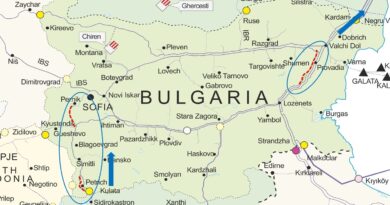
Furthermore, a major obstacle to building trust among allies is the strained relationship with Bulgaria. What began as a political dispute has escalated into a serious phase involving the encouragement of terrorist acts, including the burning of two vehicles belonging to the Bulgarian Embassy in Skopje. Such developments were to be expected after sections of the Macedonian media began engaging in vulgar and offensive attacks against official representatives of Bulgaria. These actions were deliberately left unsanctioned by Macedonian institutions, and there was not even a public distancing or condemnation from the Macedonian government. This media behavior, combined with the lack of reaction from the Mickoski government, sent a clear signal that acts of violence against Bulgarians in Macedonia—and even against Bulgarian diplomatic representatives and Bulgarian property—were acceptable and desirable.
This is a classic example of fostering distrust within NATO’s Southern Flank, and it is precisely one of the key issues that, alongside others, should be raised with Macedonia at the Ankara Summit, where an explanation and a change in behavior should be requested.
Macedonia’s relationship with NATO is further complicated by certain “unusual” connections and alleged involvement in the transfer of military equipment and weapons from NATO and EU member states, through private companies and via Macedonia, to third countries. This issue could become a topic of discussion at the summit, with both Slovakia and Macedonia potentially being asked to explain their roles in the scandal.
The scandal in question concerns the sale of two complete batteries of the KUB air defense missile system from the inventory of the Slovak Armed Forces. According to reports, the Slovak Ministry of Defence sold the systems as scrap metal for €42,000 to a private Slovak company. This company then immediately arranged, through a Romanian private company and subsequently through a Macedonian company based in Skopje, for the two complete KUB batteries to be sold to Uganda for €11 million.
In this analysis, we do not intend to examine the motives behind the purchase of the KUB systems, their actual market value, or whether this surface-to-air missile system was genuinely intended for Uganda, whether Uganda had any practical need for it, or whether the equipment was ultimately intended to support Russia through the provision of spare parts for radars and other systems that may be in short supply. What draws our attention is Macedonia’s role as a transit route in an arms trade transaction that is, at the very least, questionable given the final destination of the shipment, the speed with which permits were reportedly issued by the relevant institutions, the price involved, and the profile of the Macedonian company acting as the formal intermediary. Officially, this company is engaged in the sale of construction materials, employs only two people, and maintains strong business links with Serbia.
This scandal serves as one of the clearest indicators of how Macedonia conducts itself as a NATO member and partner, and of the degree of credibility and trust it can expect to enjoy within the Alliance.
Prof. Oliver Andonov