Beyond the BOTAS Deal: The Quiet Battle Over Europe’s Post-2027 Gas Routes
Political Maneuvers over the Future of Russian Gas in Europe
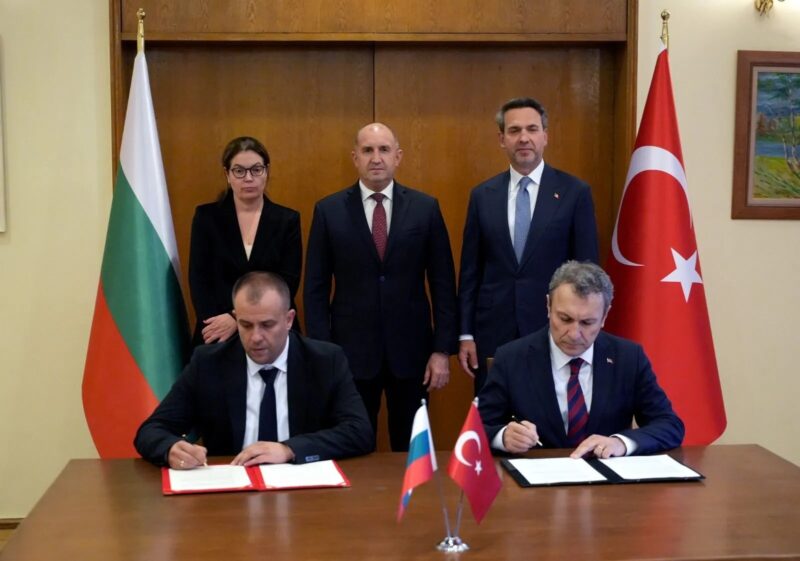
At first glance, Bulgaria and Turkey appear to have achieved a breakthrough. The controversial BOTAS agreement is said to have been “frozen for 15 months,” with the Bulgarian government presenting the outcome as a victory in defense of the national interest.
There is only one problem.
In Turkey, nobody speaks about a “freeze.” The term exists exclusively for domestic use in Bulgaria, used by Bulgarian politicians, for use by the Bulgarian public. Ankara appears perfectly comfortable allowing Radev’s government to promote a locally convenient narrative, provided that it does not alter the substance of the underlying arrangements.
The real negotiations are not about the BOTAS contract itself. They concern the future architecture of Russian gas flows into Europe once the European Union’s ban on Russian pipeline gas enters into force.
How to freeze a non-performing contract?
From a legal perspective, the notion of “freezing” a commercial contract is more of a political formula than a contractual concept.
Bulgargaz continues to accumulate unpaid obligations toward BOTAS, with outstanding liabilities estimated at approximately €267 million. Under a strict application of Bulgarian commercial law, such financial circumstances would normally raise questions about insolvency and the obligation of management to initiate restructuring proceedings.
In other words, the so-called “freeze” resolves neither the financial nor the contractual problem.
It merely buys time. Time during which public scrutiny can itself be “frozen,” allowing both sides to negotiate a revised framework for future cooperation without political scrutiny.
The real story was the Strandzha annual capacity auction
While public debate focused on the alleged “freeze,” another development passed almost unnoticed: the annual auction for entry capacity at the Strandzha interconnection point on the Bulgarian-Turkish border, held at the RBP platform on July 6th.
This is where the real story begins. The offered annual capacity was fully booked.
That reservation strongly suggests that market participants are already positioning themselves for future gas flows following the expansion of Bulgaria’s transmission system, particularly the completion of the Rupcha-Vetrino pipeline section—the final missing segment needed to unlock significantly higher transmission capacity.
Support Independent Analysis
Help us keep delivering free, unbiased, and in-depth insights by supporting our work. Your donation ensures we stay independent, transparent, and accessible to all. Join us in preserving thoughtful analysis—donate today!
In practice, however, the universe of potential capacity holders is extremely limited.
Using the Strandzha entry point requires simultaneous access to corresponding exit capacity from the Turkish transmission system at Malkoçlar. That capacity remains under BOTAS’ control.
Consequently, only a handful of players are realistically capable of securing synchronized bookings on both sides of the border. These include BOTAS and Azerbaijan’s SOCAR. Under the terms of the BOTAS-Bulgargaz deal Bulgargaz relies totalyy on BOTAS for entry and transmission capacity on Turkish territory.
Independent European traders would face considerable practical obstacles in obtaining coordinated capacity reservations without Turkish cooperation. At the same time, direct participation by BOTAS could attract closer scrutiny from the European Commission, particularly as Brussels develops mechanisms to verify the origin of imported gas into the EU from Turkey
This makes Bulgargaz arguably the most practical candidate to continue reserving capacity on paper, while arrangements resembling those embedded in the original BOTAS agreement could remain operational in practice.
Competing visions for the Rupcha-Vetrino capacity expansion
The expansion of Bulgaria’s transmission network capacity creates that is clearing the bottleneck for exports to Romania via the Vertical Gas Corridor (from Greece) or the Solidarity Ring (from Turkey) has triggered a turf competition between Turkey and Greece for privileged access to Bulgaria’s NGTN.
Two fundamentally different strategic concepts are now competing to utilize it.
The first is the European vision: the Vertical Gas Corridor, designed to increase supplies of LNG arriving through Greece together with additional Azerbaijani gas delivered via the Southern Gas Corridor.
The second is Turkey’s vision of exporting a “Turkish gas mix,” potentially including volumes of Russian gas blended with supplies from other origins.
The central strategic competition is therefore no longer about the BOTAS agreement itself.
It concerns which model will ultimately dominate the newly available transmission capacity.
Why BOTAS prefers to remain out of the spotlight?
BOTAS has little interest in being perceived as the company facilitating continued Russian gas access to the European Union. There are at least two reasons.
First, such a role would inevitably attract greater attention from the European Commission precisely when Brussels is developing increasingly sophisticated mechanisms to certify the origin of imported gas.
Second, Turkey’s domestic gas market remains largely inaccessible to European companies and gas trade with the EU is essentially a one-way street.
While BOTAS enjoys broad access to European infrastructure, European traders possess no equivalent rights within Turkey’s transmission system.
This asymmetry was embedded in the original tripartite protocol between BOTAS-Bulgartransgaz and Bulgargaz, preceding the BOTAS-Bulgargaz term sheet. Bulgargaz formally reserved transmission capacity, while BOTAS became the principal economic beneficiary through its effective use.
Symmetry on paper, asymmetry in practice
On paper, the BOTAS agreement appeared balanced. Bulgargaz reserved entry capacity into Bulgaria that BOTAS sought to utilize. BOTAS, in turn, granted access to Turkish LNG terminals and transportation through the Turkish transmission system to the export point.
In practice, however, the obligations were never symmetrical. Bulgargaz accepted fixed financial commitments regardless of whether it actually utilized the booked capacity. BOTAS retained the flexibility to use the infrastructure only when commercially advantageous and only for actual transported volumes.
This structural imbalance transformed what had been presented as an instrument of diversification into a significant financial burden for Bulgaria.
The real strategic stake
The question today is no longer the future of an unfavorable commercial agreement – the BOTAS-Bulgargaz deal.
The real issue is whether Russian natural gas will continue finding a pathway into the European market through Turkey and Bulgaria after 2027.
While Russian gas flows through TurkStream 2 will be more difficult to present as part of a “Turkish gas mix,” since the pipeline is dedicated to transporting Gazprom gas only, the alternative entry point at Strandzha offers a different proposition. Directly connected to the BOTAS transmission network and explicitly referenced in the BOTAS-Bulgargaz Term Sheet, Strandzha is well positioned to serve as a key component of this emerging strategy. Plans to expands its entry capacity to more than 30 mcm per day until 2030 further fit into the overall picture.
Once the EU prohibition on Russian pipeline gas enters into force, suppliers seeking to maintain these flows will require mechanisms capable of presenting Russian-origin gas as part of a broader Turkish supply portfolio.
This explains why negotiations continue behind closed doors.
The objective is not to “freeze” the existing agreement but to redesign the architecture of future gas deliveries and establish new commercial coalitions capable of operating within—or testing the limits of—the European Union’s evolving regulatory framework in preparations for the
The 15-month “freeze” period appears designed to give negotiating teams on both the Bulgarian and Turkish sides sufficient time to develop and implement a revised commercial framework. If the objective is to preserve Russian gas flows to Europe after 2027, such efforts would inevitably require close coordination among the principal market participants, including Gazprom, to devise arrangements capable of operating within—or testing the limits of—the EU’s evolving sanctions and regulatory regime.
Ilian Vassilev